
How Glycolic Acid Is Transforming Hair and Scalp Health

We exfoliate our face religiously.
We invest in serums, sunscreens, and overnight treatments.We worry about clogged pores and uneven texture.
But here’s a question most people don’t ask:
When was the last time you exfoliated your scalp?
The scalp is skin. It produces oil. It sheds dead cells. It gets clogged. It gets irritated. And yet, it’s often the most neglected part of our haircare routine.
Over the past few years, one ingredient has quietly moved from skincare shelves into the world of haircare — and it’s transforming how we think about scalp health.
That ingredient is glycolic acid.
Traditionally known for brightening skin and improving texture, glycolic acid is now emerging as a powerful solution for scalp buildup, dandruff, oil imbalance, and dull hair. And while it may not be marketed as a “miracle growth ingredient,” its impact on scalp health is significant — and surprisingly effective.
Let’s explore why glycolic acid is becoming a game-changer in modern haircare.
What Is Glycolic Acid?
Glycolic acid belongs to a family of ingredients called Alpha Hydroxy Acids (AHAs). It is commonly derived from sugarcane and is widely used in skincare products for exfoliation.
What makes glycolic acid unique?
It has the smallest molecular size among AHAs.
It penetrates effectively into the upper layers of the skin.
It works as a chemical exfoliant, not a physical scrub.
Unlike scrubs that manually remove dead skin through friction, glycolic acid works by loosening the bonds between dead skin cells. This allows them to shed more easily, revealing fresher, healthier skin underneath.
When applied to the scalp, this same principle helps remove:
Dead skin buildup
Excess oil
Residual styling products
Pollution deposits
In short, it clears the “clogged canvas” your hair grows from.
Why Scalp Health Matters More Than You Think
Hair growth doesn’t start at the ends. It starts at the scalp.
A healthy scalp creates the right environment for strong, shiny, resilient hair. But modern lifestyles often interfere with that balance.
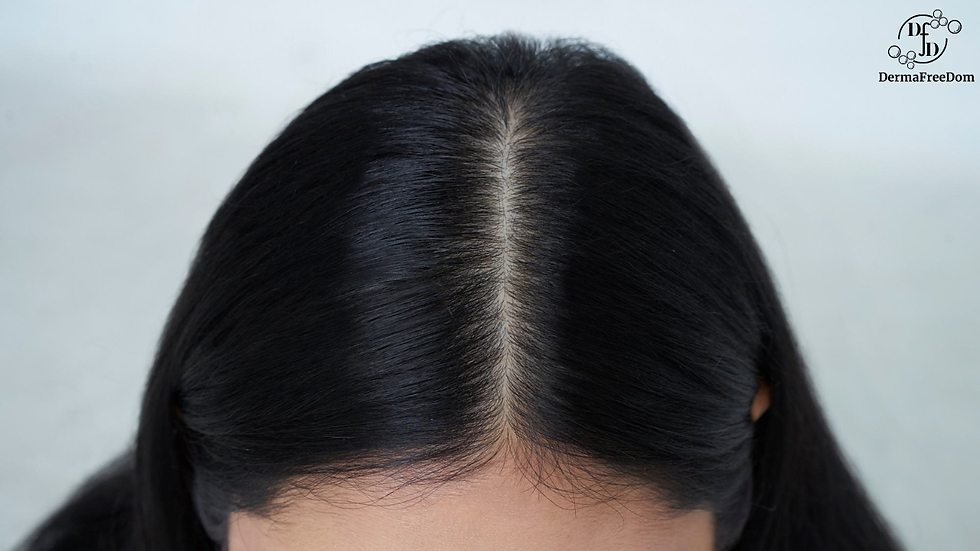
Common scalp issues include:
Product buildup from dry shampoo, serums, and styling sprays
Excess sebum production
Flaking and dandruff
Itchiness
Blocked follicles
Inflammation
Over time, this buildup can disrupt the scalp’s natural microbiome — the delicate ecosystem of bacteria and fungi that keep it balanced.
When the microbiome becomes imbalanced:
Oil production may increase
Inflammation may rise
Flaking can worsen
Hair may appear dull or limp
Think of it this way:
If your scalp is a garden, buildup is the layer of debris preventing healthy plants from growing.
Glycolic acid helps clear that debris.
How Glycolic Acid Works on the Scalp
To understand its benefits, we need to understand its mechanism.
Glycolic acid:
Breaks down the glue-like bonds between dead skin cells.
Encourages natural cell turnover.
Dissolves excess surface oil.
Loosens flakes and debris.
Improves absorption of subsequent treatments.
It does not directly stimulate hair follicles.
It does not magically grow hair overnight.
Instead, it optimizes the environment in which hair grows.
And that difference matters.

A cleaner scalp allows:
Better oxygen flow
Reduced inflammation
Improved penetration of nourishing ingredients
Balanced oil production
The result? Healthier-looking hair over time.
Key Benefits of Glycolic Acid for Hair and Scalp
1. Removes Stubborn Buildup
If you use styling products regularly, you likely have invisible buildup sitting on your scalp.
Dry shampoos, mousses, gels, sprays, even conditioners — they leave residue behind.
Glycolic acid helps dissolve and lift this residue gently, without harsh scrubbing.
2. Reduces Dandruff and Flaking
Flakes often result from excess dead skin accumulation.
By exfoliating the scalp, glycolic acid reduces visible flaking and promotes smoother texture.
However, severe dandruff caused by fungal overgrowth may require targeted antifungal treatment — glycolic acid supports but doesn’t replace medical solutions.
3. Balances Oil Production
Oily scalp is often misunderstood.
When dead skin and residue block follicles, the scalp may produce even more oil to compensate.
By clearing congestion, glycolic acid helps normalize sebum production.
4. Improves Shine and Volume
A clean scalp allows hair to lift properly at the roots.
Hair appears:
Less weighed down
Fresher
Shinier
More voluminous
5. Enhances Effectiveness of Other Treatments
If you use:
Hair growth serums
Anti-hair fall solutions
Hydrating scalp treatments
They may work better when the scalp surface is clear.
Exfoliation improves absorption.
Who Should Consider Using Glycolic Acid?
Glycolic acid may be beneficial if you have:
Oily scalp
Mild dandruff
Itchy scalp from buildup
Frequent use of styling products
Fine hair that gets greasy quickly
Dull, flat hair
It may not be ideal if you have:
Extremely sensitive scalp
Open cuts or wounds
Severe psoriasis
Active infections
When in doubt, consult a dermatologist.
How to Use Glycolic Acid Safely on the Scalp
Using acids requires balance.
Here’s how to incorporate it safely:
Frequency
Start with once per week.Increase to twice weekly if tolerated.
Patch Test
Always test on a small area before full application.
Application
Apply directly to dry scalp.
Massage gently.
Leave for 5–10 minutes (as directed).
Rinse thoroughly.
Follow Up
Use a hydrating conditioner to maintain moisture balance.
Avoid Overuse
Too much exfoliation can cause:
Dryness
Redness
Sensitivity
More is not better.
Consistency is.

Glycolic Acid vs Salicylic Acid for the Scalp
Both are exfoliating acids, but they work differently.
Glycolic Acid | Salicylic Acid |
AHA | BHA |
Water-soluble | Oil-soluble |
Surface exfoliation | Penetrates deeper into pores |
Good for dryness & buildup | Good for very oily, acne-prone scalp |
Choose glycolic acid if:
You want smoother texture
You struggle with flakes
You have moderate oiliness
Choose salicylic acid if:
You have extremely oily scalp
You deal with scalp acne
Some advanced formulas combine both carefully.
Common Myths About Using Acids on Hair
Myth 1: “Acids will cause hair fall.”
Hair fall is usually related to hormonal, nutritional, or genetic factors.Glycolic acid used correctly does not damage follicles.
Myth 2: “It will burn your scalp.”
Mild tingling is normal.Burning indicates irritation or overuse.
Proper formulation matters.
Myth 3: “Natural scrubs are safer.”
DIY scrubs like sugar or salt can cause micro-tears.Chemical exfoliation is often more controlled and gentle.
Myth 4: “It’s only for dandruff.”
Glycolic acid supports overall scalp clarity — not just flake reduction.
Can Glycolic Acid Help with Hair Growth?
Let’s be clear.
Glycolic acid does not directly stimulate new hair follicles.
However, it may:
Reduce inflammation
Improve circulation
Remove follicle blockage
Support healthier growth cycles
Think of it as preparing fertile soil — not planting the seed.
If your growth products weren’t absorbing properly before, exfoliation may make a noticeable difference.
Potential Side Effects
While generally safe when used correctly, possible side effects include:
Temporary redness
Mild stinging
Dryness
Increased sensitivity
To minimize risk:
Avoid using with other strong exfoliants simultaneously.
Use sunscreen if scalp is exposed.
Discontinue if irritation persists.
The Bigger Picture: Why This Shift Matters
Haircare is evolving.
For years, the focus was entirely on:
Oils
Masks
Conditioners
Serums
But modern science recognizes something essential:
Healthy hair begins with a healthy scalp.
And scalp health requires:
Balance
Cleansing
Exfoliation
Hydration
Glycolic acid represents a shift from surface-level shine to root-level care.
It bridges skincare science and haircare innovation.
Final Verdict: Is Glycolic Acid Worth It?
Glycolic acid is not a miracle cure.
It will not instantly transform thin hair into thick hair.
But it does something powerful and often overlooked:
It creates the right environment.
A cleaner scalp.Balanced oil production.Reduced buildup.Improved product absorption.
And when the foundation improves, everything built on it improves too.
If your hair feels heavy, dull, oily, or flaky — the solution may not be adding more oil.
It may be removing what’s blocking growth.
Because sometimes, the most revolutionary changes are the quiet ones.
And glycolic acid is quietly rewriting the future of scalp care.
Interested in incorporating glycolic acid into your scalp care product line?
At DermaFreeDom (DFD), we specialize in developing innovative skincare and scalp care formulations tailored for modern consumer needs. From concept development to private labeling and third-party manufacturing, we help brands bring high-performance products to market.
📩 Get in touch with our team today to discuss your custom formulation or manufacturing requirements.
DermaFreeDom (DFD) specializes in crafting premium skincare products, catering to both B2B and B2C markets. Our offerings include a diverse range of innovative and high-quality solutions tailored to meet the unique needs of our clients. Additionally, we provide third-party manufacturing services, enabling businesses to create customized skincare products under their own brand.
With a commitment to excellence and a focus on customer satisfaction, DermaFreeDom is your trusted partner for all things skincare, from private labeling to cutting-edge product development.
Our mission is to deliver skincare solutions that inspire confidence and promote healthy, glowing skin for everyone. please click below to discuss further.



Comments